
The father of the bride has an important role to play in the wedding party.
You may have prepared a thoughtful speech, practiced walking down the aisle, or helped with any number of wedding-day details. One thing that is common to nearly every wedding is that there will be photographs, and often video, capturing moments your family will revisit for years.
Not only do you want to look your best in those keepsakes, but you also want to feel comfortable and confident throughout the day. It is no fun to spend a wedding feeling restricted in an ill-fitting suit, overdressed for the weather, or unsure whether your attire suits the occasion.
So, how do we dress Dad for comfort, style, and the significance of the day? Here are a few father of the bride dressing tips.
#1. Follow the wedding dress code
The number one tip for any father of the bride or groom is to understand the wedding dress code and follow it. Talk with the bride and groom about their plans for attire, colors, venue, and formality. As a parent of the bride, you will be part of many important photos, so your outfit should complement the wedding party without competing with it.
The possibilities for wedding attire are broad, often depending on the venue, season, theme, time of day, and the couple’s personal preferences. Here are some basics:
White tie
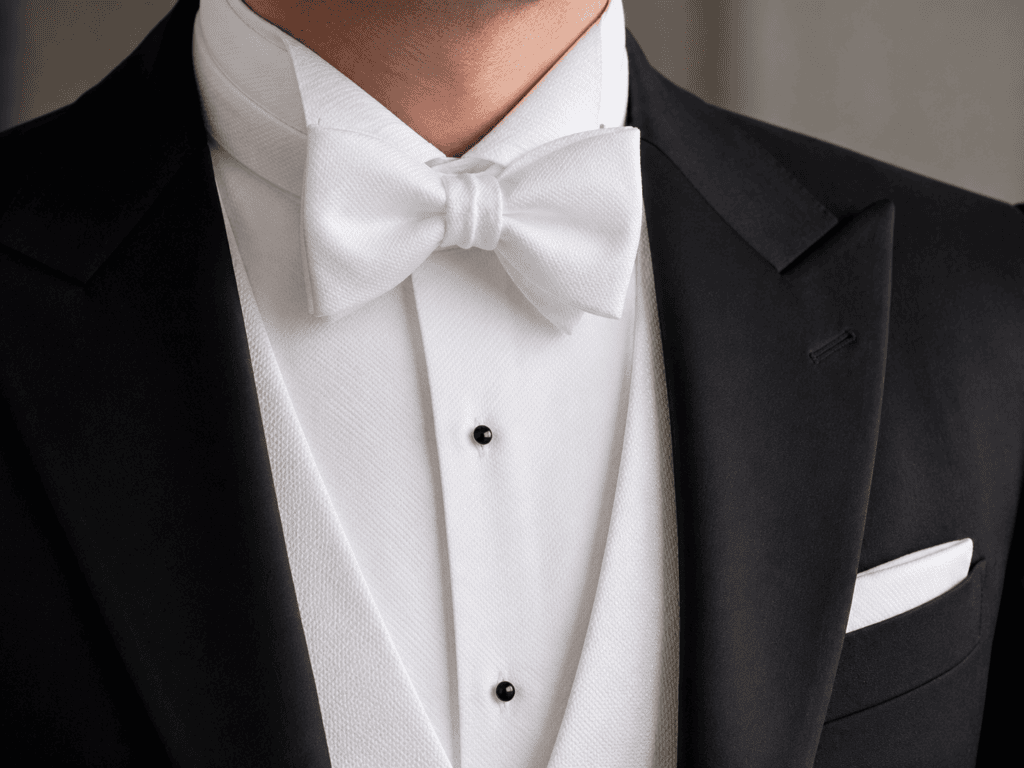
This is the most formal dress code for modern weddings. It generally calls for a tailcoat, formal white shirt, white vest, white bow tie, and formal footwear.
Black tie
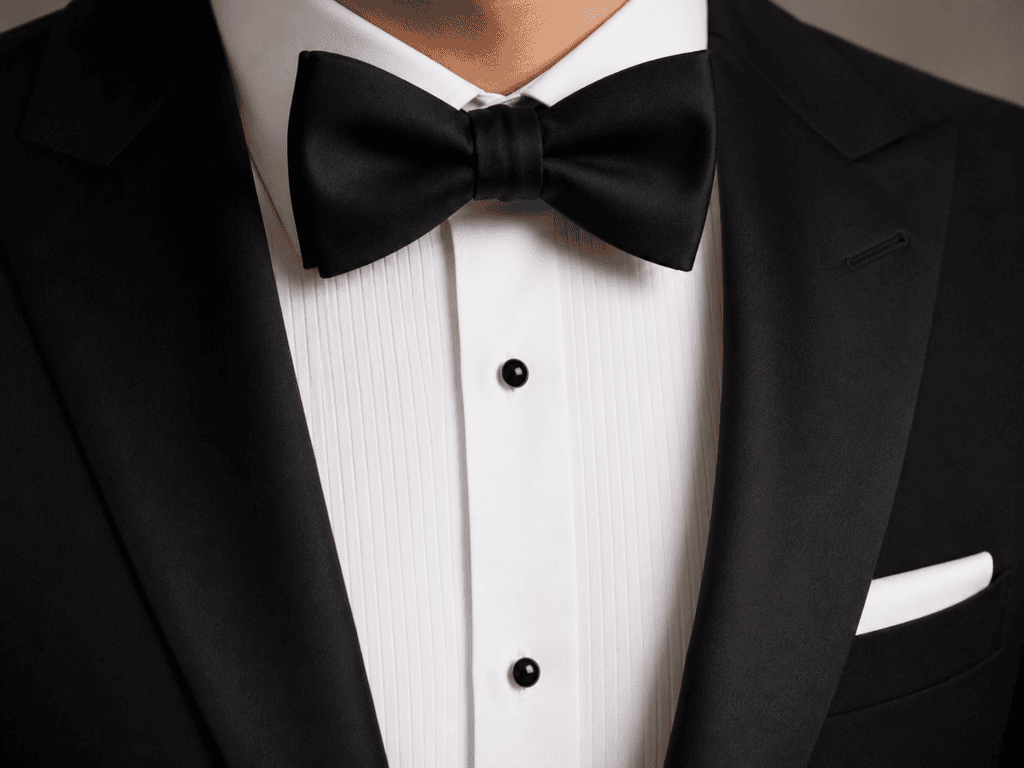
A tuxedo is the standard choice. A black tuxedo is classic, while midnight blue can also be an elegant option for evening events.
Black tie optional
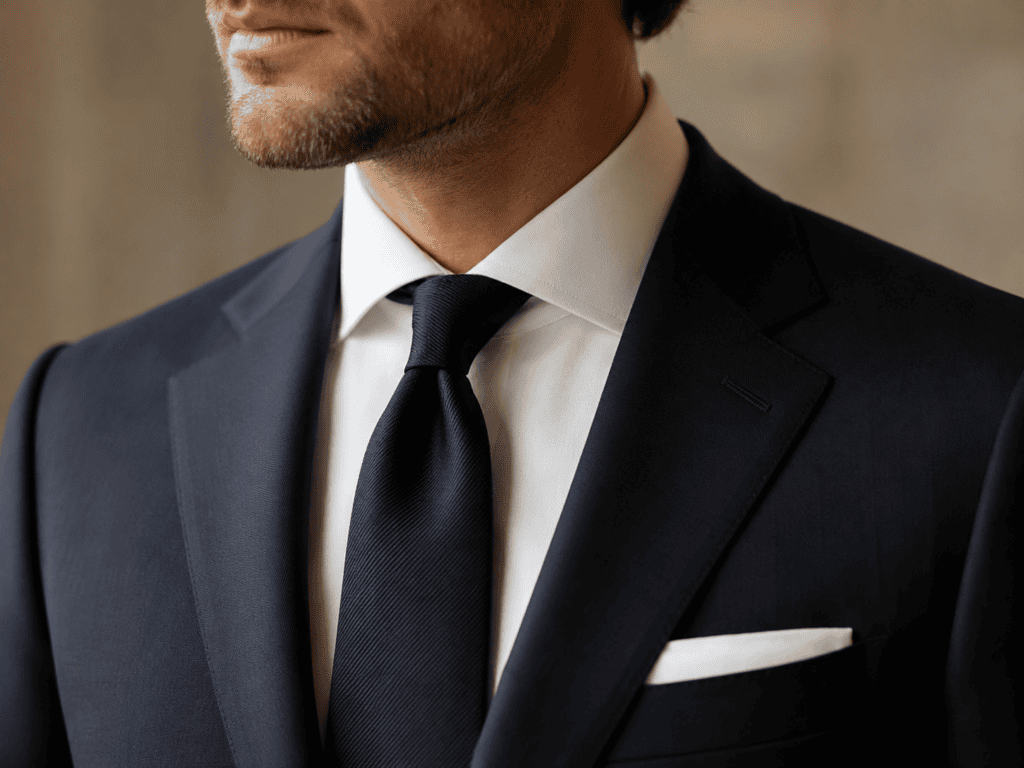
A tuxedo is appropriate, but a dark, well-tailored suit in navy, charcoal, or black may also be acceptable.
Formal or semi-formal
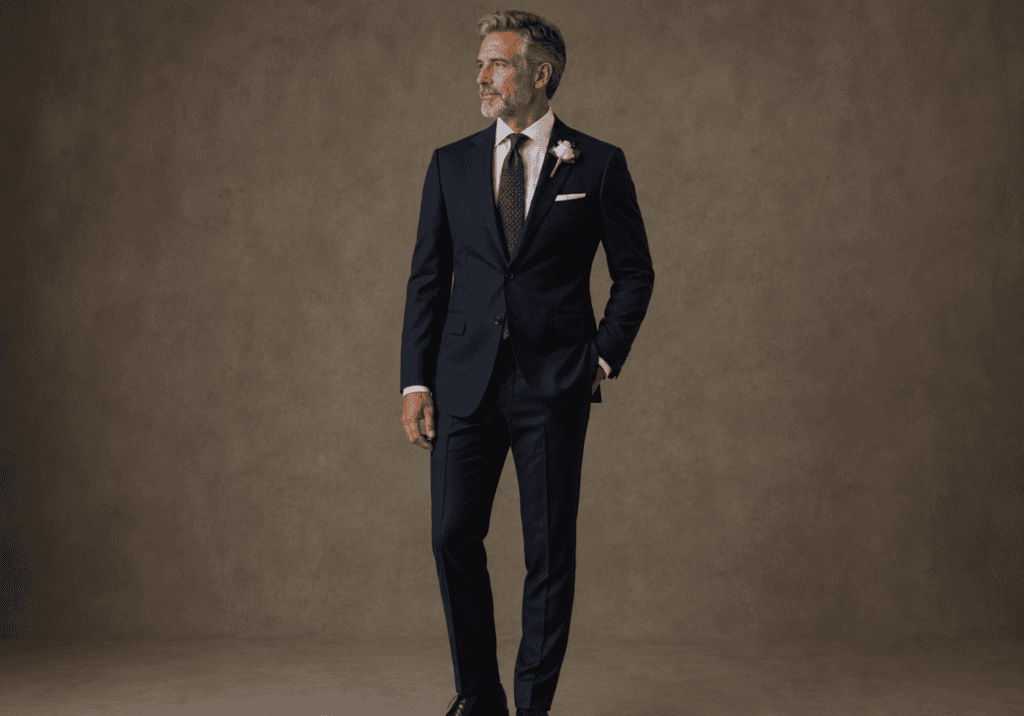
A suit is usually the right choice. Navy, charcoal, and refined neutral tones are especially versatile. For daytime or warmer-weather weddings, lighter shades may be appropriate depending on the venue and couple’s preference.
Cocktail attire
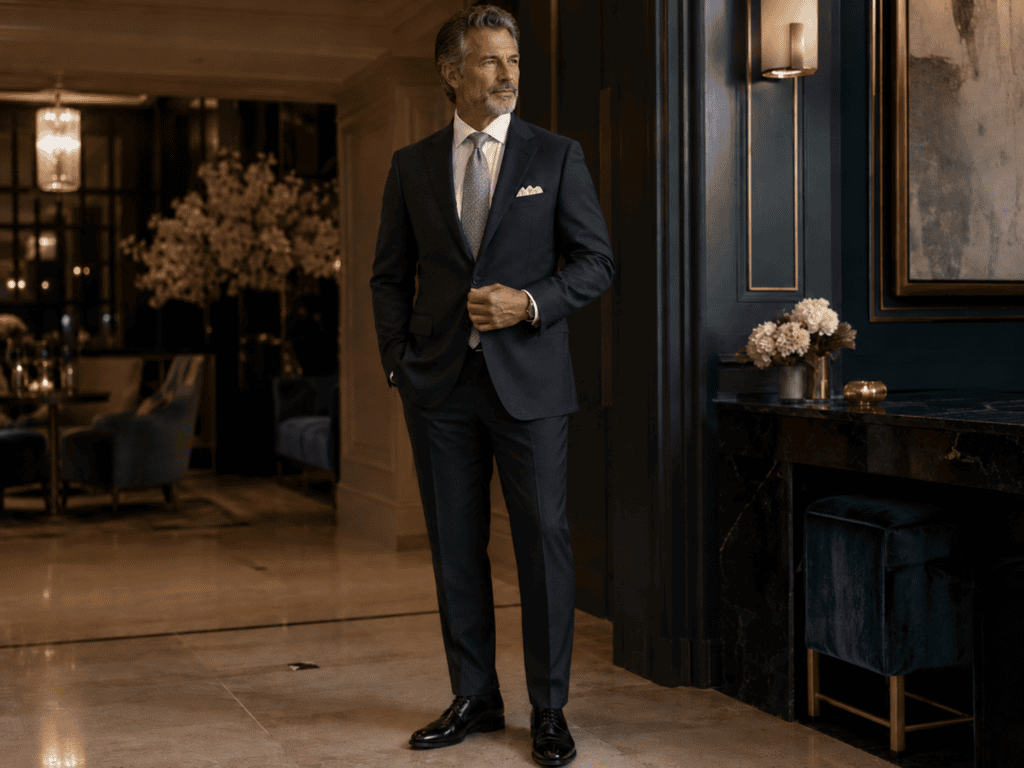
This gives you some room for personality while still looking polished. A tailored suit, sport coat with dress trousers, refined shirt, and tasteful accessories can work well.
Casual or beach wedding
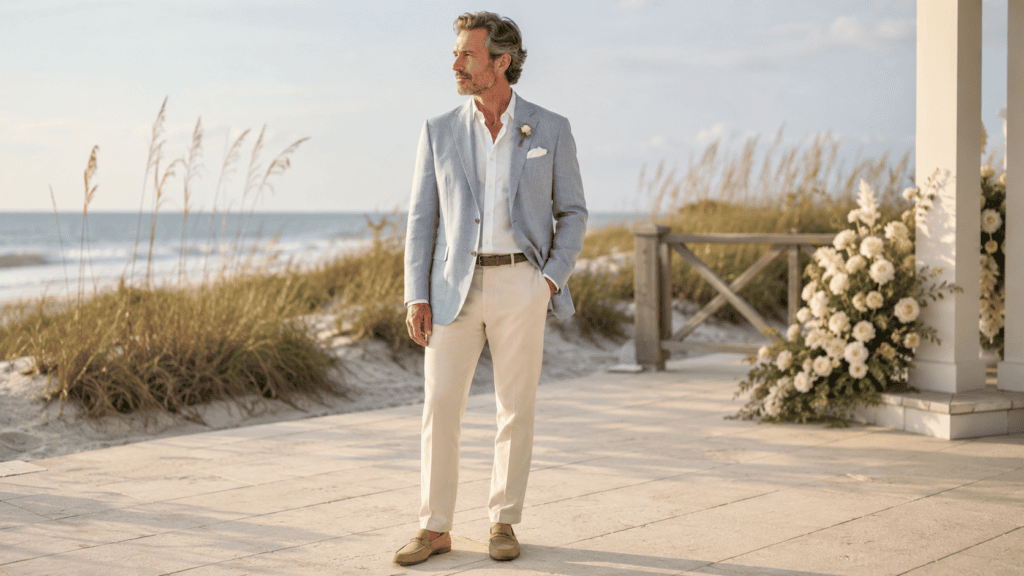
Casual does not mean careless. Dress pants or chinos with a collared shirt may be appropriate, often with a sport coat depending on the setting. Lightweight fabrics and softer colors are often best for outdoor or seaside weddings.
Color themes
Sometimes the bride and groom will state a preference for a color palette. Fathers do not need to match the bridal party exactly, but ties, pocket squares, or boutonnières can help create harmony in photos.
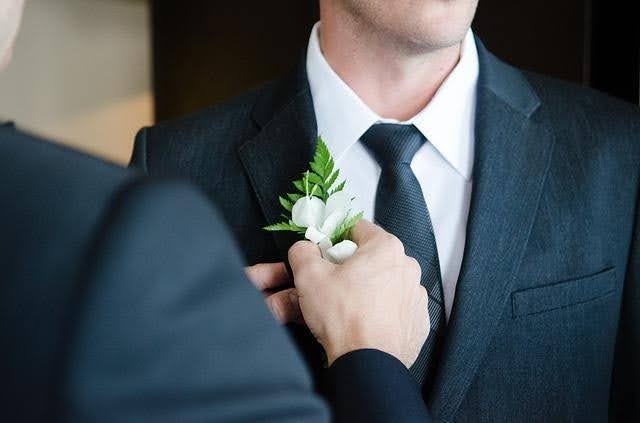
#2. Match the formality of the groom
There is often debate over whether the father of the bride should match the groom or groomsmen exactly. In most cases, an exact match is not necessary, and the father of the bride does not have to match the groomsmen. The more important point is to match the level of formality, since fathers wear looks that coordinate well without needing the same suit as the groom or each other, and color should bride match the wedding party rather than copy it.
If the groom and groomsmen are wearing tuxedos, the fathers should generally wear tuxedos as well. If the wedding party is wearing suits, a suit is usually appropriate. You would not want to appear underdressed next to a formal wedding party, but you also do not want to outshine the groom, and the goal is usually to complement the groom outfit rather than create an exact groom match. That does not mean everyone needs to wear the same color.
Coordination can be subtle. For example, you might wear a tie or pocket square that complements the wedding colors, choose a suit in a related tone, or select accessories that connect visually with the bridal party. The goal is to look distinguished, intentional, and cohesive in wedding photos without looking identical to everyone else.
#3. Remember that wedding wear is not office wear
A good rule of thumb: if your outfit looks exactly like something you would wear to the office, it may not feel special enough for the day.
Wedding attire should look elevated. That does not always mean flashy or overly formal, but it should feel considered. Choosing the perfect suit for your body type, along with a refined shirt, polished shoes, and carefully chosen accessories, can make a tremendous difference.
Your father of the bride suit should fit properly and suit the time of day, venue, and formality of the wedding. For a formal evening event, a navy suit is a classic option, while a black suit works especially well for the most formal settings, alongside charcoal as a reliable choice. For a daytime wedding, garden venue, or summer celebration, lighter tones and breathable fabrics may be more appropriate, and a blue suit can work well for a lighter daytime setting; bright blue is best reserved for weddings where it clearly suits the overall aesthetic.
When in doubt, it is usually better to be slightly overdressed than underdressed. A tailored suit or tuxedo always communicates respect for the occasion.
#4. Consider your accessories
Accessories may be part of the stated dress code, or they may be left up to you. Sometimes the bride or groom will have a specific vision for the parents’ attire, especially with photographs in mind. In that case, follow their guidance.
Accessories are also a tasteful way to add personality. The key is restraint. Less is often more.
Consider the following:
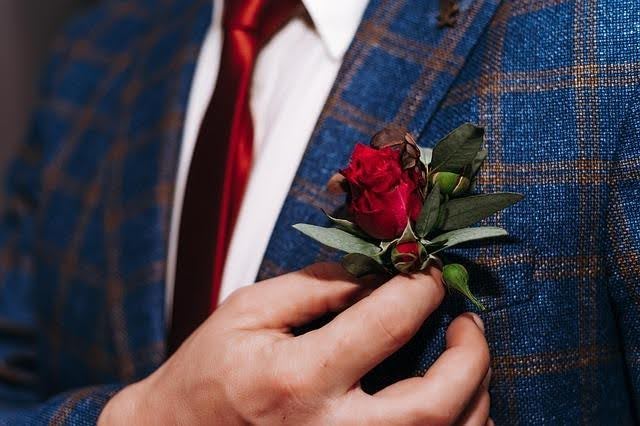
Boutonnière – This floral detail is worn on the lapel of a suit or tuxedo jacket. It may be chosen as part of the wedding flowers, or it may be designed to coordinate with the bride’s bouquet or overall wedding palette.
Pocket square – A pocket square adds polish and visual interest. It does not need to match your tie exactly, but it should complement your outfit.
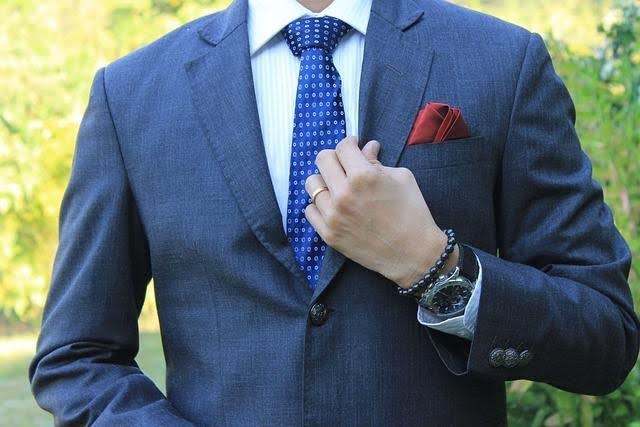
Cufflinks – A tasteful pair of cufflinks can add quiet elegance, especially with a formal shirt.
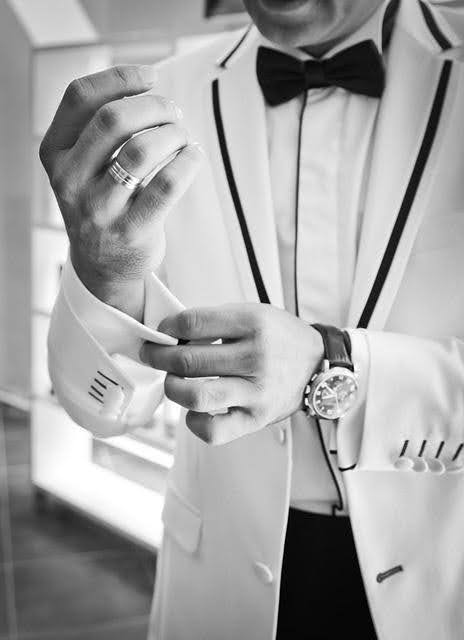
Tie or bow tie – Choose based on the formality of the event. A bow tie is traditional for black tie and pairs naturally with tuxedo styling, while a silk tie works beautifully with most suits.
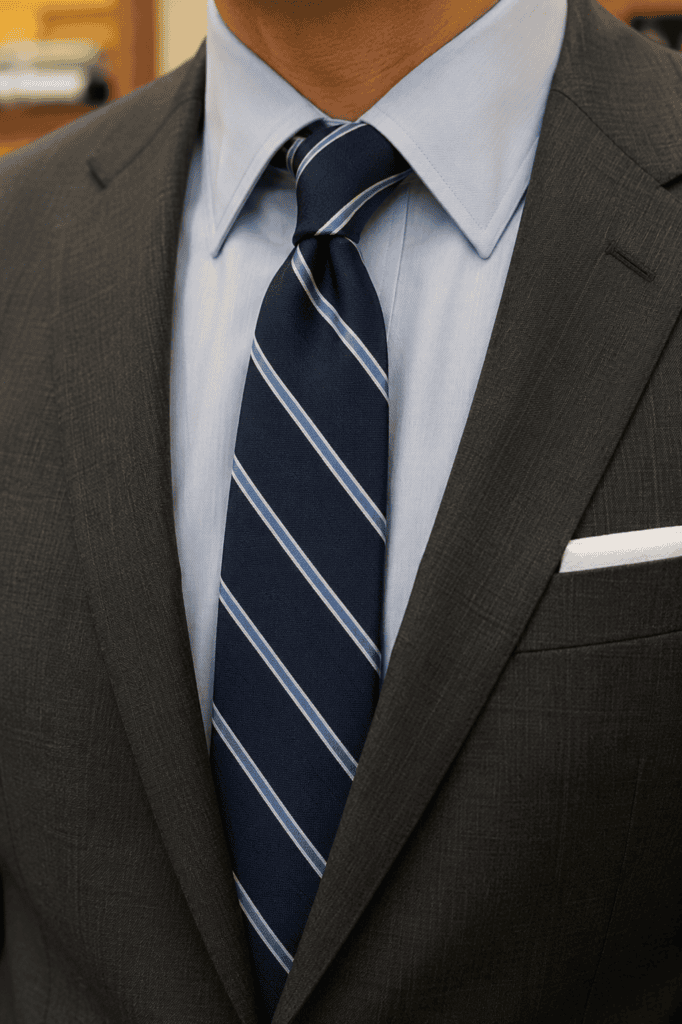
Vest or waistcoat – A vest can add formality, structure, and distinction. It is especially useful when you want to look a bit more elevated without being overly bold. For very formal weddings, a classic black tuxedo with a shawl-neck tuxedo jacket is a timeless option, and a shawl-neck tuxedo offers a classic look for formal events.
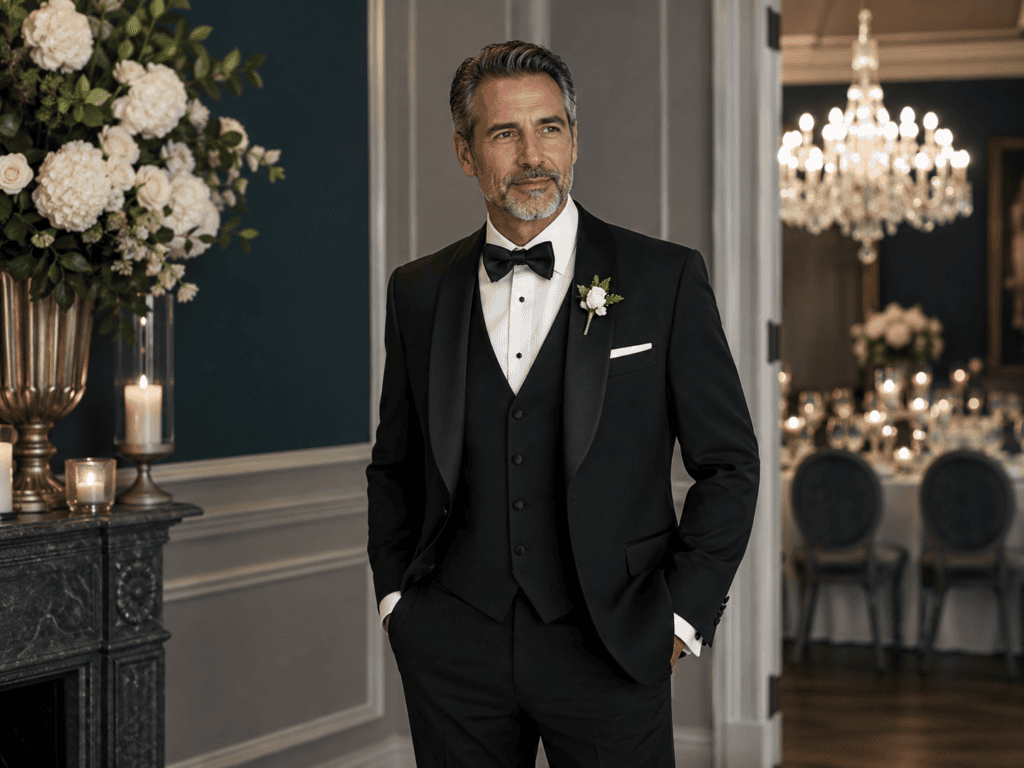
Shoes – Always pay attention to your shoes. They should be polished, appropriate to the formality of the event, and comfortable enough for a full day of standing, walking, greeting guests, and dancing. Oxfords, Derbys, loafers, and monk straps can all be appropriate depending on the outfit.
#5. It is all about fit
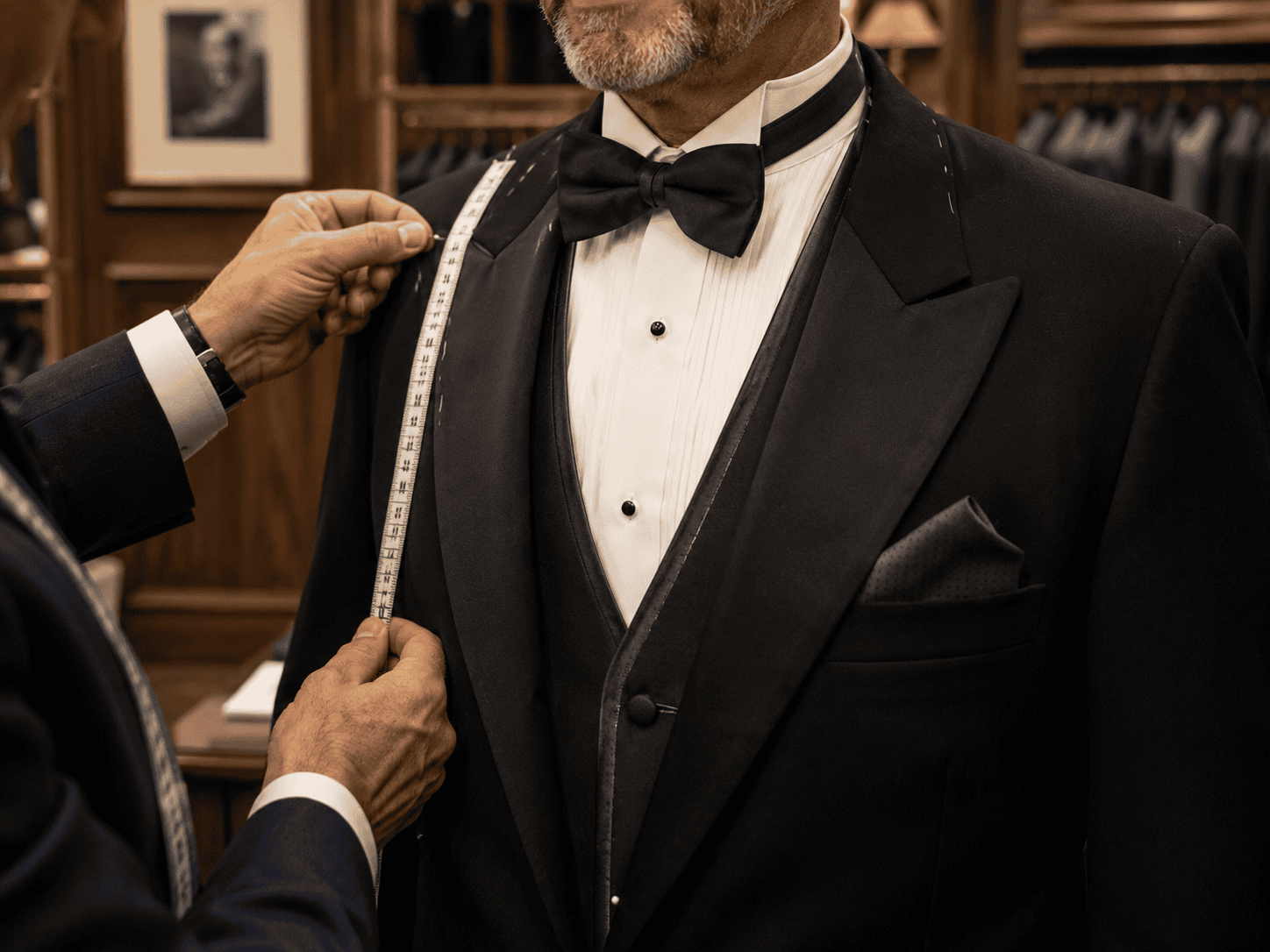
There is an old stereotype of the father at the wedding, fidgeting in formal attire that rarely leaves the closet. Do not let this be you. Wedding attire should never feel like a costume.
The ideal suit or tuxedo should feel natural to wear. Shirt collars, sleeves, suit jackets, trousers, and waistbands should be neither too tight nor too loose. A jacket should sit cleanly across the shoulders, close comfortably, and allow you to move with ease. The sleeves should not run too long past the wrist. Trousers should be hemmed properly and shaped so pants do not have extra fabric collecting around the ankles.
The best solution is tailoring. Whether your garment is made from scratch, selected from ready-to-wear stock, or refined from something you already own, understanding the difference between tailored and made-to-measure clothing will help you decide what level of customization you need to look truly well dressed.
A skilled tailor can help with fit, fabric, proportions, comfort, and finishing details. Family Britches helps fathers, grooms, groomsmen, and wedding guests navigate these choices through hands-on service, custom tailoring, alterations, and personalized guidance, along with educational resources such as a comprehensive men’s style glossary of menswear fashion terminology. Our custom tailoring and alterations service is designed to ensure that every suit or tuxedo fits impeccably, providing comfort and confidence on the big day. Whether you need adjustments to an existing garment or a fully customized fit, Family Britches offers expert craftsmanship to perfect your wedding attire.
#6. Start planning early
Wedding attire should not be left until the last minute. Fathers should begin planning once the couple has settled on the venue, season, and dress code, and they may find it helpful to consult a personal virtual stylist for guidance.
As a general guideline, start several months before the wedding. This gives you time to choose between a tuxedo, suit, sport coat, or custom garment, consider fabrics and colors, schedule fittings, and make any needed adjustments by visiting a premier clothing store or working with a trusted local clothier.
If the garment is custom or made-to-measure, allow even more time. Custom work often involves fabric selection, measurements, fittings, and final refinements. Even ready-to-wear garments benefit from advance planning because alterations can take time, especially during busy wedding seasons.
A thoughtful timeline also reduces stress. The final weeks before a wedding are filled with details, and your attire should already be well underway by then.
#7. Decide between ready-made, custom, and tailored pieces
The right choice depends on the wedding, your wardrobe, your timeline, and how often you expect to wear the garment again.
Off-the-rack can be a practical starting point, especially when the right suit or tuxedo is available in a strong fabric and silhouette. However, off-the-rack garments are built to standard proportions, so tailoring is usually necessary for the best result.
Custom tailoring offers a higher level of precision. It allows you to choose fabric, fit, styling details, linings, buttons, and other personal touches. Exploring custom tailored clothing from a dedicated men’s custom tailor is a strong choice for a once-in-a-lifetime event, especially if you want the perfect suit to serve you well beyond the wedding day. If you decide to purchase instead of rent, it may be worth buying your first custom tailored suit so the garment is made with your specific needs and occasions in mind. Renting can also be a convenient, cost-effective option if you only need the outfit once or coordination matters more than ownership.
Made to measure clothing offers a personalized approach to wedding attire, ensuring the father of the bride’s suit fits perfectly and suits his style. Unlike off-the-rack options, made to measure garments are crafted based on precise measurements and individual preferences, allowing for adjustments in fabric, cut, and details. This approach combines the benefits of custom tailoring with a more accessible price point and timeline, making it ideal for fathers seeking a distinguished, comfortable, and well-fitting suit for the wedding day. Choosing made to measure clothing guarantees a polished look that complements the wedding’s overall aesthetic and the father’s unique role in the celebration.
The most important factor is not simply whether the garment is new or existing. It is whether the finished result fits beautifully, suits the occasion, and helps you feel confident.
#8. Dress for the venue and season
The venue and season of the wedding should guide your fabric, color, layering, and overall comfort. A father of the bride suit or tuxedo should always match the formality of the event, but seasonal details help ensure the outfit feels appropriate, comfortable, and polished, similar to how coordinated men’s outfits are built for specific occasions.
Spring weddings
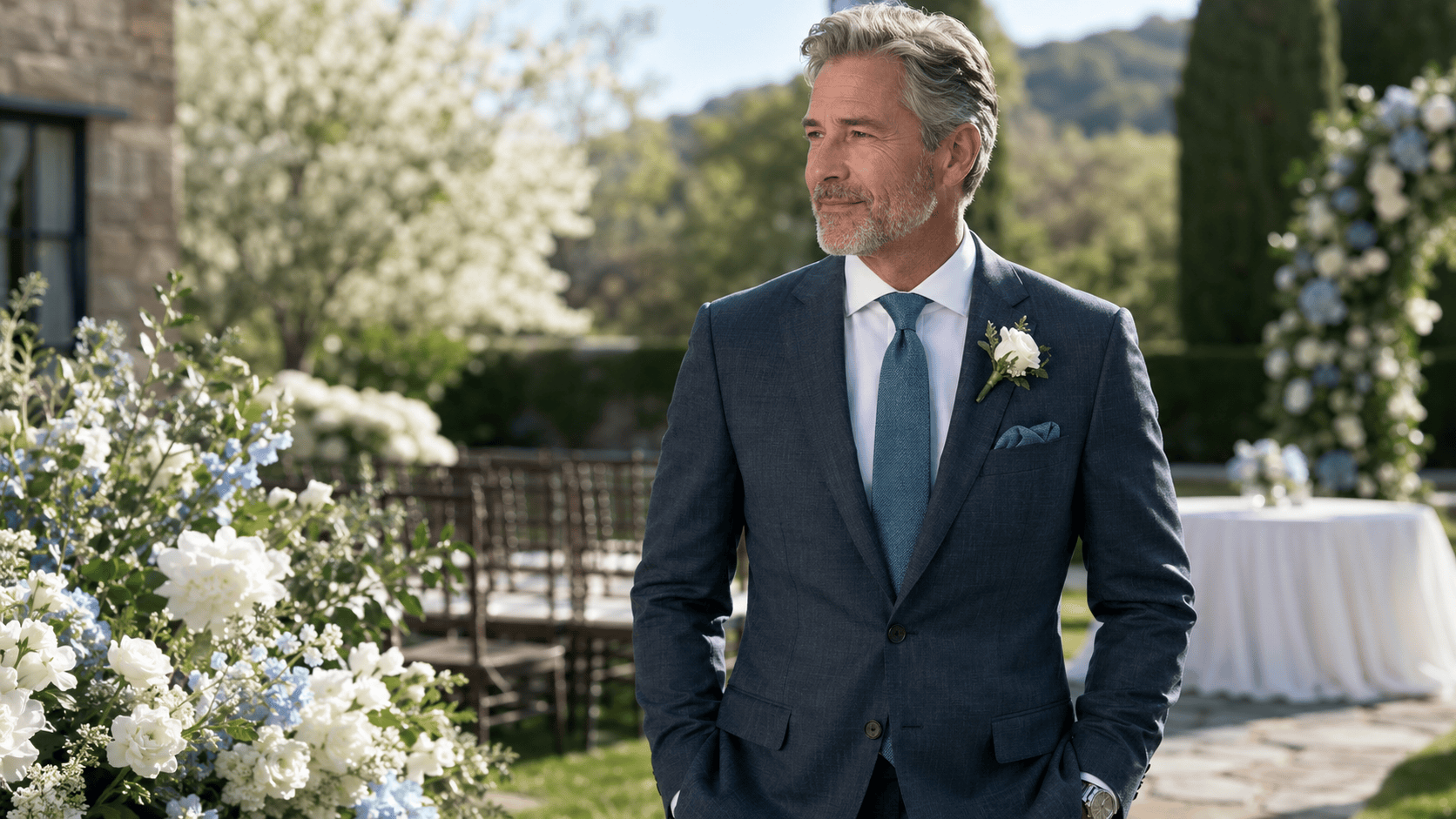
Spring weddings often bring changing temperatures, fresh colors, and outdoor settings. A father of the bride outfit should feel refined but adaptable.
Lightweight wool, wool blends, and quality cotton fabrics can be excellent choices. They provide structure without feeling too heavy. Navy, soft blue, medium gray, and lighter neutrals can work well, especially for daytime ceremonies.
Spring is also a good time to use subtle color in accessories. A tie or pocket square in a soft seasonal tone can coordinate beautifully with floral arrangements without feeling overly decorative.
For outdoor spring weddings, consider practical details. Grass, damp walkways, or garden settings may affect your shoe choice. Choose polished footwear that looks formal enough but can handle the setting.
Summer weddings
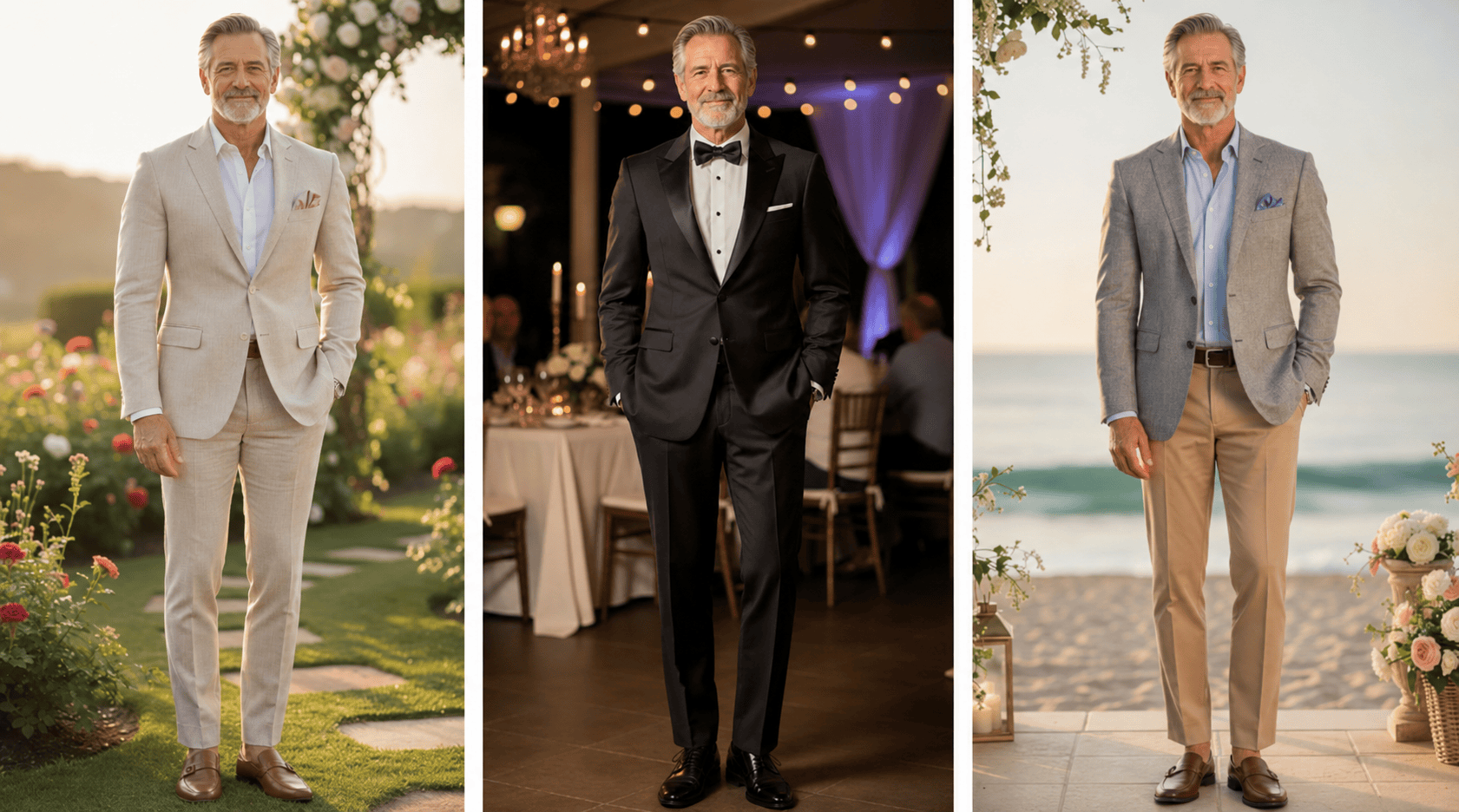
Summer weddings call for breathable fabrics, lighter colors, and careful attention to comfort. This is especially important for outdoor ceremonies, garden receptions, beach venues, and destination celebrations.
Lightweight wool, linen, cotton blends, and other breathable fabrics can help keep you comfortable while maintaining a polished appearance. Depending on the dress code, colors such as light gray, tan, soft blue, beige, or navy may be appropriate.
For formal summer weddings, do not assume that heat changes the dress code. A black tie wedding still calls for a tuxedo, but the right fabric, fit, and tailoring can make it more comfortable.
For less formal summer weddings, a sport coat with tailored trousers may be a strong choice. A crisp shirt, refined loafers, and a tasteful pocket square can create a polished look without feeling overly heavy.
Fall weddings
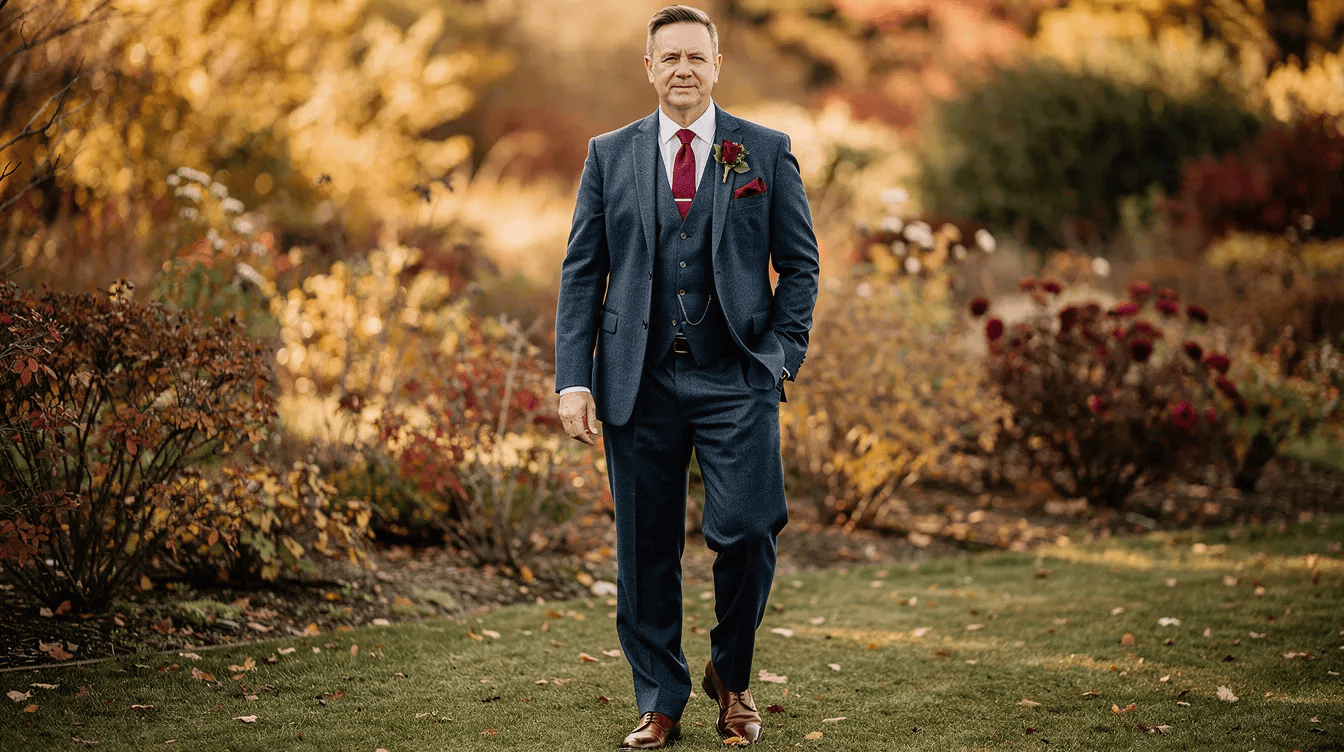
Fall weddings invite richer color, texture, and slightly heavier fabrics. This is an excellent season for fathers who want a distinguished, sophisticated look.
Navy, charcoal, deep brown, forest green accents, burgundy accessories, and textured fabrics can all work beautifully. Wool, flannel, tweed, and refined blends are especially suitable as the weather cools, making these choices particularly well suited for fall weddings.
A vest can be particularly effective in fall, adding depth and formality while also providing warmth. Brown leather shoes, a rich tie, or a textured pocket square can help the outfit feel seasonally appropriate without looking too bold.
For outdoor fall weddings, think about comfort as temperatures shift from afternoon to evening. Layering can help you remain comfortable throughout the ceremony, photographs, cocktail hour, and reception.
Winter weddings
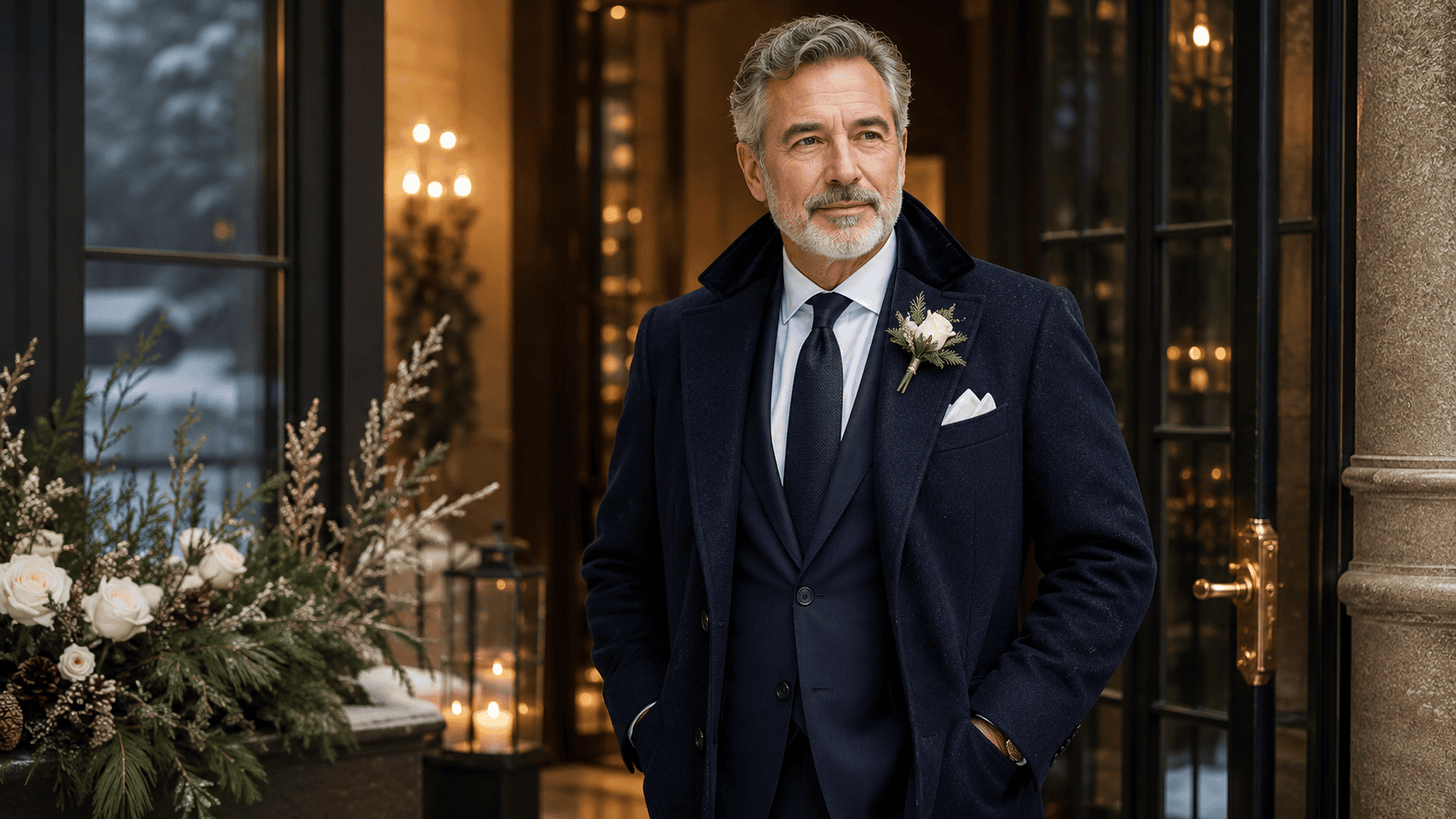
Winter weddings often lean more formal, making them an ideal setting for tuxedos, dark suits, rich textures, and elegant accessories.
Black, midnight blue, navy, charcoal, and deep jewel tones are especially appropriate. Burgundy can also work as an elegant accent or even a suit-color option for a winter wedding when it fits the overall palette. Wool, flannel, velvet accents, and heavier formal fabrics can provide both warmth and refinement.
Outerwear matters. If you will be arriving in a coat, choose one that complements your suit or tuxedo. Investing in a high-quality men’s designer suit and a polished overcoat will look far better in arrival photos than casual outerwear.
Holiday-season weddings may allow subtle festive touches, but keep them sophisticated. A velvet bow tie, refined pocket square, or deep seasonal tie can add personality without distracting from the couple.
#12. Add personality without taking attention away from the couple
The father of the bride should look distinguished, but the day still belongs to the couple. Your outfit can reflect your personality through subtle choices: a particular tie, a favorite pair of cufflinks, a tasteful pocket square, or an heirloom watch with sentimental value.
Avoid anything that feels too loud, costume-like, or disconnected from the wedding aesthetic or the couple’s vision. The best father of the bride attire looks confident, personal, and appropriate, much like well-balanced business casual work attire for men that feels polished without being overdone.
If you are unsure, ask yourself three questions:
Does it match the formality of the wedding? Does it complement the couple’s vision? Will it still look tasteful in photographs years from now?
If the answer is yes, you are likely on the right track.
#13. Prepare for photographs and important moments
Your attire will be part of many meaningful moments and wedding photos: walking your daughter down the aisle, greeting guests, family portraits, toasts, and the father-daughter dance.
This is why fit and comfort matter so much. A jacket that pulls, trousers that bunch, or shoes that become uncomfortable will affect how you move and feel. If it suits the overall look, flat front trousers can create a cleaner line in photos and make movement feel easier. Opting for custom tailored clothing ensures a well-fitted suit or tuxedo that allows you to focus on the day, not your clothing.
Before the wedding, try on the full outfit exactly as you plan to wear it. Include the shirt, shoes, belt or suspenders, tie, cufflinks, pocket square, and any other accessories. This final check helps ensure every detail works together.
Final thoughts
If there is one overall tip for the father of the bride or groom, these helpful tips start with communicating with the couple early. Ask about the dress code, the level of formality, the color palette, the venue, and how they envision the family appearing in photographs.
You do not need to match the groom or groomsmen exactly, and the father of the bride does not need to wear the same color as the wedding party, only a complementary one. Your attire should feel special, polished, and appropriate to the venue and season.
Family Britches can help fathers of the bride and groom find the right balance of formality, fit, fabric, and personal style, whether they are choosing among classic bride suits or refining the details for the perfect father look. From custom tailoring and alterations to complete wedding outfitting services, our team provides the hands-on service needed to help you look your best for the occasion.
Visit or call Family Britches to schedule a wedding consultation today.